
From Access to Opportunity: Digital Skills for Employment Stability
Navigating today’s workforce systems without digital skills is difficult—often creating barriers before opportunities even begin. At the same time, digital access and employment stability are deeply connected. From submitting applications to communicating with employers, technology is no longer optional—it is essential.
Through its partnership with All Chicago, scaleLIT is working to close this gap by embedding digital literacy into employment and housing initiatives that support individuals experiencing housing instability.
Building on Existing Pathways
scaleLIT’s Home Illinois initiative is designed to connect individuals experiencing homelessness to employment, training, and long-term stability through person-centered, relational support. Participants are referred through coordinated systems and work with staff who provide hands-on guidance—support that goes beyond traditional case management to help individuals stay connected, engaged, and moving toward their goals.
As part of this work, scaleLIT introduced its inaugural Digital Literacy Lunch & Learn cohort, designed specifically for participants already engaged in this initiative.
The Lunch & Learn cohort ran from February 6 through March 13, 2026, with participants meeting weekly over six weeks at scaleLIT headquarters and the American Job Center at the King Center. The structure created a consistent, supportive environment where participants could build skills while staying connected to broader employment and housing services.
Digital Skills as a Foundation for Stability
For many participants, digital literacy is not just a skill—it is a barrier to employment, access, and independence.
As a leader in digital literacy, scaleLIT is uniquely positioned to integrate these skills into workforce and housing efforts in ways that are practical, accessible, and responsive to participant needs. By layering digital instruction into existing programs, scaleLIT ensures that participants are not only connected to opportunities but also prepared to access and sustain them.
Across the cohort, participants completed more than 54 hours of learning and assessment on the Northstar Digital Literacy platform, earning 26 certificates and badges.
The curriculum was designed to build skills progressively, combining digital literacy with career readiness and self-directed growth. Core learning areas included:
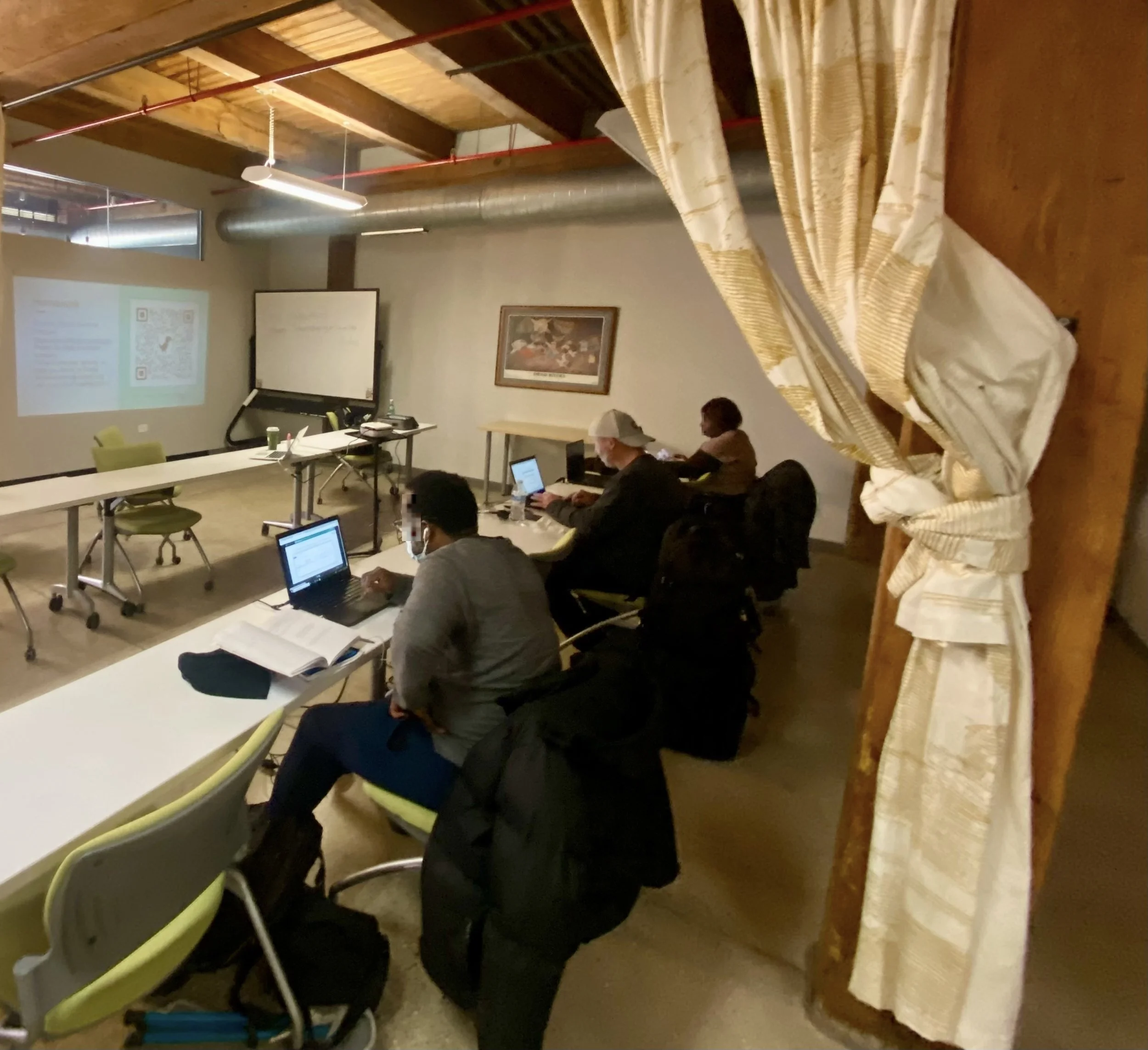
Small group learning created space for individualized support and peer connection.
Self-Discovery & Goal Setting, including workplace readiness
Career Exploration, professionalism, and digital basics
Job Search Strategies and software skills for success
Participants completed Northstar modules across a range of competencies, including:
Essential computer and device skills
Internet navigation and email use
Microsoft Word, Excel, PowerPoint, and Google Docs
Career search skills and digital footprint awareness
Operating systems such as Windows 11 and Mac OS
Additional learning resources from the Chicago Public Library’s Digital Learn platform, Illinois WorkNet, CareerOneStop, and LinkedIn Learning were incorporated to reinforce skills and support real-world application.
Just as important as the curriculum was the approach: small group learning, individualized support, and the flexibility to learn at one’s own pace. The Lunch & Learn model helped remove barriers to participation while creating a consistent, welcoming space grounded in dignity, trust, and respect.
Participant Reflections
The impact of the cohort is best reflected in the words of those who completed it.
One participant shared:
“Now I have more confidence in my ability to navigate the digital world successfully. This will be very useful to me in so many ways.”
He also emphasized the importance of support throughout the process:
“The instructor made sure that not one of us was left behind. My questions were answered effectively, and I felt supported every step of the way.”
Another highlighted the program’s flexibility and environment:
“The program allows you the room to grow at your own pace into the programs you need to improve on.”
And reflected on the experience as a whole:
“This place has been a home and an office of peace and instruction for the future.”
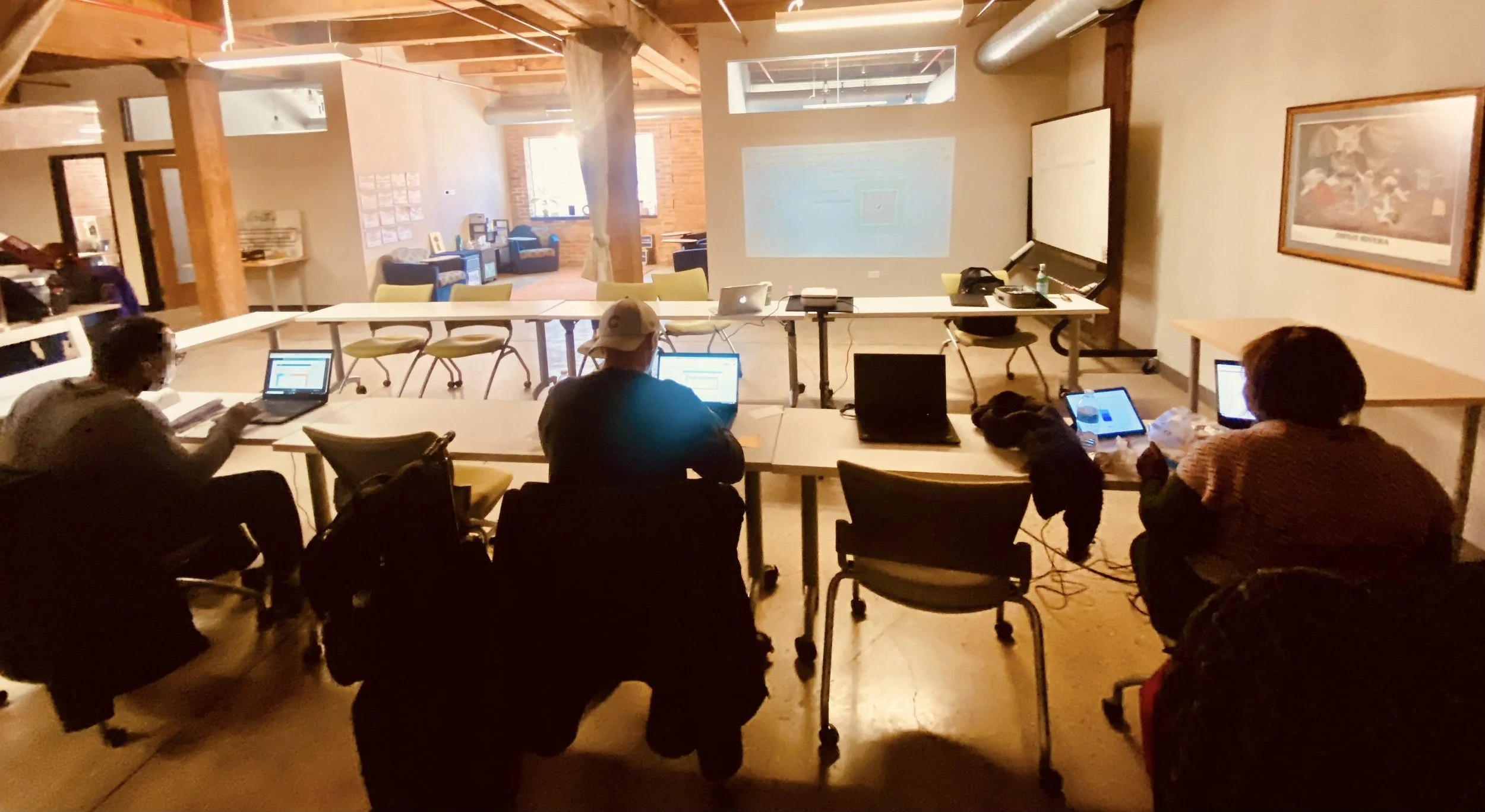
Participants built confidence using technology for employment and everyday tasks
A Relational Approach to Learning
The success of the cohort was driven not only by content, but by the relationships that supported it. Under the leadership of Ed Tech Director Michael Matos, participants received consistent, individualized attention, ensuring that each learner could move forward with confidence.
This reflects scaleLIT’s broader approach—one that recognizes that access alone is not enough. For individuals navigating housing instability and workforce entry, sustained, relational support plays a critical role in maintaining engagement and building momentum toward employment.
Outcomes and What’s Next
In this inaugural cohort:
2 participants completed the full six-week program
26 Northstar certificates and badges were earned
54+ hours of digital learning and assessment were completed
While small in size, the cohort reflects a broader opportunity: integrating digital literacy into workforce and housing systems in ways that are coordinated, responsive, and grounded in participant experience.
As scaleLIT continues its work with Home Illinois, digital literacy will remain a core component of supporting participants on their path to employment and stability. Future cohorts will build on this model, expanding access to essential skills and strengthening connections across systems so that individuals are not lost at critical points of engagement—but supported every step of the way.